Showing posts with label Flash floods. Show all posts

Thursday, April 19, 2018

Flash floods and some views of the park in April

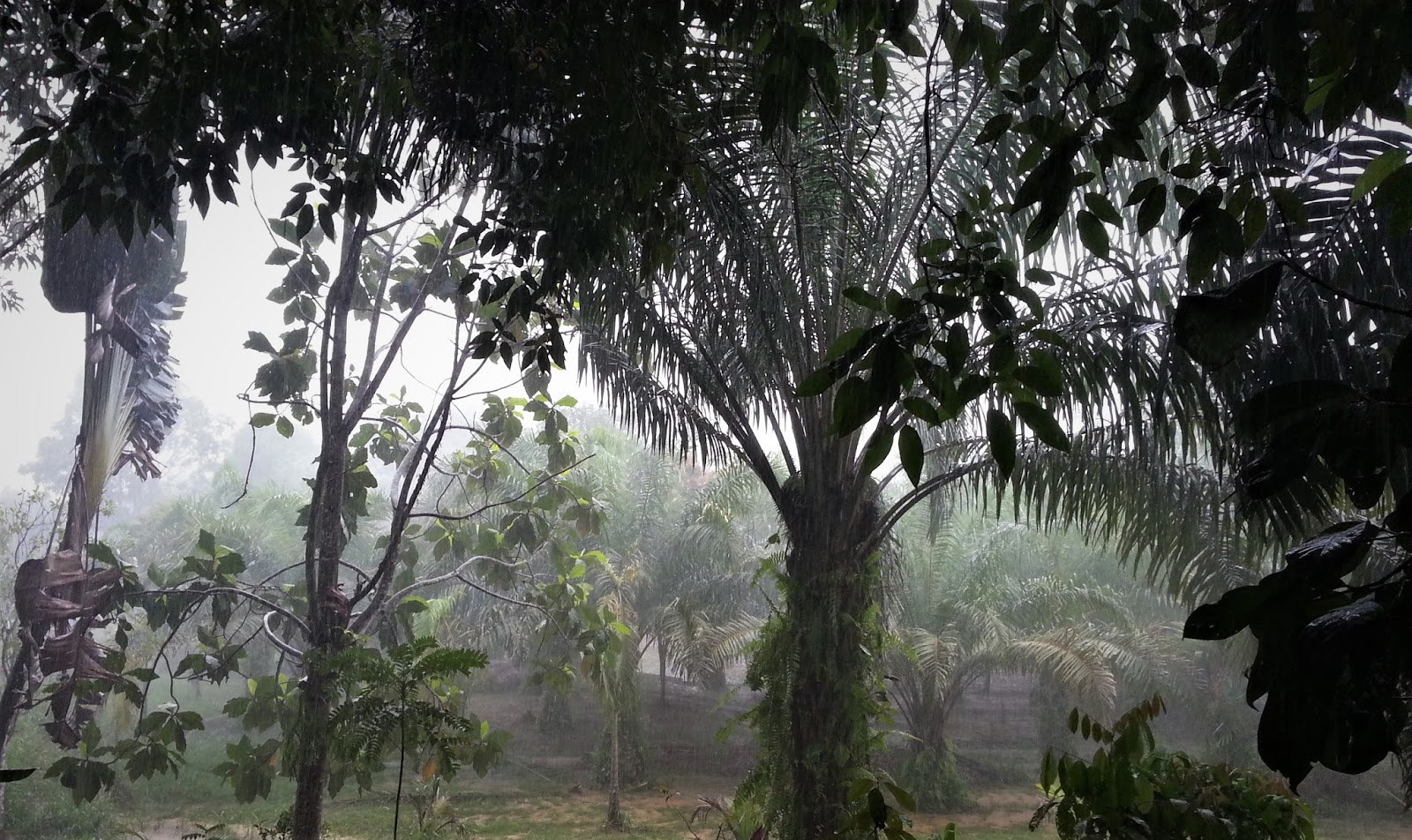
Zone F  in heavy rain.

 It has been raining heavily for the last three days (mainly nights).  The parkland is situated on a very hilly area and is the headwaters of a stream, which for convenience I call the Kambatik stream.  The heavy downpour would normally create flash floods.  However, due to its hilly landscape the excess downpour would race downstream.  This event is exciting to watch and offers some fine photographic moments.
After the floods, I walked up the Cempedak Hill and found a lone Plaintive Cuckoo.  This time it is the female of the species, a lifer for me.
Here are some views of the park taken in April’18.
Flash floods at Zone F

Zone B

View towards Zone A, looking east, from Cempedak Hill (Zone G)

Thursday, March 2, 2017

Flash floods and heavy rain


 It was raining heavily on the 2nd of March causing flash floods along the stream.  However, such flooding would last for a short period, usually one to two hours,  as the flood waters would get washed downstream very quickly due to location of the park which is at the hilly start of the stream.  Only on certain locations where the stream meanders that the waters overflow the stream causing flash floods to the surrounding plain.  The energy and force of the current is very strong and fast, a test to nature's fury.
View of flood from 'Abaq' (verandah)


Friday, July 22, 2016

The beauty of flash floods

The Kambatik stream in flash floods

 Today the rains poured heavily for about an hour from 11 am.  All the downriver sections of the stream starting at Zone B encountered flash floods.  But as usual the flash floods would disappear the moment the rains stopped.  Flash floods is a normal matter for the park and is treated as a good thing.  It helps to do spring cleaning of the stream and its banks or plains by the stream.  The floods bring in loads of new soil and deposit them on both sides of the stream and surrounding plains.  Flash floods can be useful for games and recreation e.g. kayaking or canoeing.  Its a great time for photography, too.  Below are more pictures taken today to show the 'beauty of flash floods'.


Tuesday, December 29, 2015

After the flash floods

Flash floods on 25 Dec'15
The stream back to normal size on 30 Dec'15
Location : Provinsi Carpentaria, Zone F
Note: The tall tree at the foreground is a wild 'Rambutan' tree species.  This is one of the oldest cultivated tree at the park and despite its 70 years old age has been fruiting luxuriously this year.

Saturday, December 26, 2015

A swift moment of power

Flash floods at Zone D, 25 Dec'15.

It was midday yesterday when the clouds deposited tons of water around the park. Within an hour of torrential rain the stream grew 20 times its size and created a scene of extraordinary beauty and power. The plains around the stream was for a moment of time a watery playground. I took time to wade in the swift current and took photographs for the record. This phenomena is prevalent in December when Bintulu is under the mercy of the monsoon rains. Once the rains stopped, the flash floods quickly subsided and by the next hour time it back to its normal self. Over the years I begin to admire this natural occurrence and treat it as nature's gift to the park.

Stream at Provinsi Carpentaria, Zone F
25 Dec'15

Thursday, October 8, 2015

Flash flood

The stream overflows in a matter of one hour torrential rain
Zone F

Red Hibiscus after the rain
 It rained just for about an hour between 2 - 3 pm.  The rain came down in a torrential downpour and within one hour swelled the stream and cleared whatever debris that clogged the small stream.  Today's flash floods confirmed that the end of year rainy season has arrived.
Taken on 8 Oct'15, Zone C

Monday, August 31, 2015

A rainy Sunday

It's raining at the park
Zone B
Bamboo orchid
It has been raining on and off yesterday, a Sunday (30/8/15).    Even though I normally work on Sunday, it was just good that I called yesterday a holiday due to the rains. My holiday is once a week, a Friday.  Life is too short to have too many free days off in a week.  Life in the park is always occupied everyday, if not to see the plants and wildlife, it is about getting yourself up and kicking everyday and the older you get, the greater the need to be alive.  And the rains, they make you feel  even more energetic.  To capture what happens when it rains and what is the view after the rains.  A Bamboo orchid ( Arundina graminifolia) caught my eyes as I moved about the park in the rain.  The one hour heavy rains brought in a brief flash floods, a subject I love to photograph.  The light conditions are also good for photography.  
Stream overflowing after the heavy rain
Zone F

Thursday, April 30, 2015

It's flooding time

The stream overflows and create a unique and beautiful waterscape at Zone F plain area.

 It is really out of the ordinary.  It is, however, a very much welcome change even for a few hours.  The Kambatik stream overflows this morning after a torrential downpour which lasted for  2 hours, between 9.30 - 11.30 am.  The presence the  flash floods is a spectacular phenomena as a result of the park's location in the headlands section of the lowland dipterocarp forest where it is situated.  It is a wonderful feeling walking through the flood water because of the element of fluidity, its sound and speed and the feeling of wetness as I waded against the flow to capture photographs from low camera angles.  If you are slow or your camera is out of battery or not willing to get wet, you'll miss the scenery by remaining indoors during the rain.  This is because the flash floods disappear soon after the rain stopped.  Below are some memorable shots of this morning flash floods.
View of Provinsi Carpentaria, looking upstream

View of Provinsi Carpentaria, looking downstream

Zone D
Location : Road culvert area, view towards Zone B

Sunday, April 26, 2015

Clear stream revival, sounds familiar?

Location : Provinsi Carpentaria
Does it sounds familiar?  Clear stream revival! This is the phenomena after every major flash floods that happen in the park.  Follow the stream and you will discover its beauty after it is washed off all the unnecessary debris and murky water that abounds by its sides under normal conditions.  After every torrential rains the stream gets spring cleaned.and refreshed with cleaner water. Because the standards of development at the park are high, the water quality is very good.  In fact, you can bath using the stream water.  The stream is a reflection of life.  The only constant in life is change.  There  are always changes in  contemporary life, the changes are increasing accelerated and becoming more complex.  As the stream flows downriver and into the open sea, it slows down.  It faces friction, conflicts as it lands itself in more level-playing field.  Competition hots up.  What are we to do with life?  Two things I learned today by watching the stream.  Firstly, it is to accept change as part of life and complexity a challenge as we advance in years.  Secondly, what is more important is to understand the direction of change.  By having a good grasp of where we are going we are every ready to face life's complexities and opportunities.  Precisely at this point of writing these words somehow pop out of the blues ...Opportunity awaits the prepared mind.

Wednesday, January 14, 2015

January rains and flash floods

Flash floods at fall back area , Zone F.  As fast as they come, they leave the scene once the rains stopped.  Flash floods occur when it rains heavily  for at least two hours.

Paku Kelindang (Iban)
Blechnum orientale
 Situated in the headlands, the park is subject to flash floods because of the small size, shallowness and the  many turns of the  of streams here. The flash floods happens regularly in the rainy month of January but it  affects mainly the fall back areas.  These are areas on both sides of the streams (valleys) that are planned to receive as much excess water and let it overflow the banks and  surrounding areas.  This phenomena is however short-lived, lasting about two to three hours when the rains are extra heavy.  Flash floods are a welcome site here because they clear unwanted debris, replenish the banks with a new layer of soil once the floods subside and bring to life many activities associated with water.
Heavy rains at Zone C.

Little Spiderhunter comes a calling in between rains....

Sunday, August 24, 2014

Flash floods again this morning

Looking east.  This is the start of the Kambatik stream


 The flash floods that occur at the park is an important part of the garden ecology.  The planning of the park takes great account of the need to have a fall back position in times of floods.  I am talking here about the flash foods that ravages the plain areas along the Kambatik stream.  This is an accepted fact at the park, a moment of great interest, excitement and play.  Here's today's views of the flash floods from the start of the Kambatik stream moving downriver.....
Passing part of Zone C

Passing part of Zone F, Provinsi Carpentaria area at left

Passing area between Zone C and Zone F

Passing Zone F

Passing Zone C

Passing Zone D

Passing Zone D, Provinsi Borneo area

Passing Zone F